Revenue is moving. Cash timing is not always moving with it.
Your company is operating, customers are buying, and the work is real. Then the calendar intervenes: vendors want payment before receivables clear, payroll arrives on schedule, and the opportunity refuses to wait.
See the capital decision
Two views of the same operating reality.
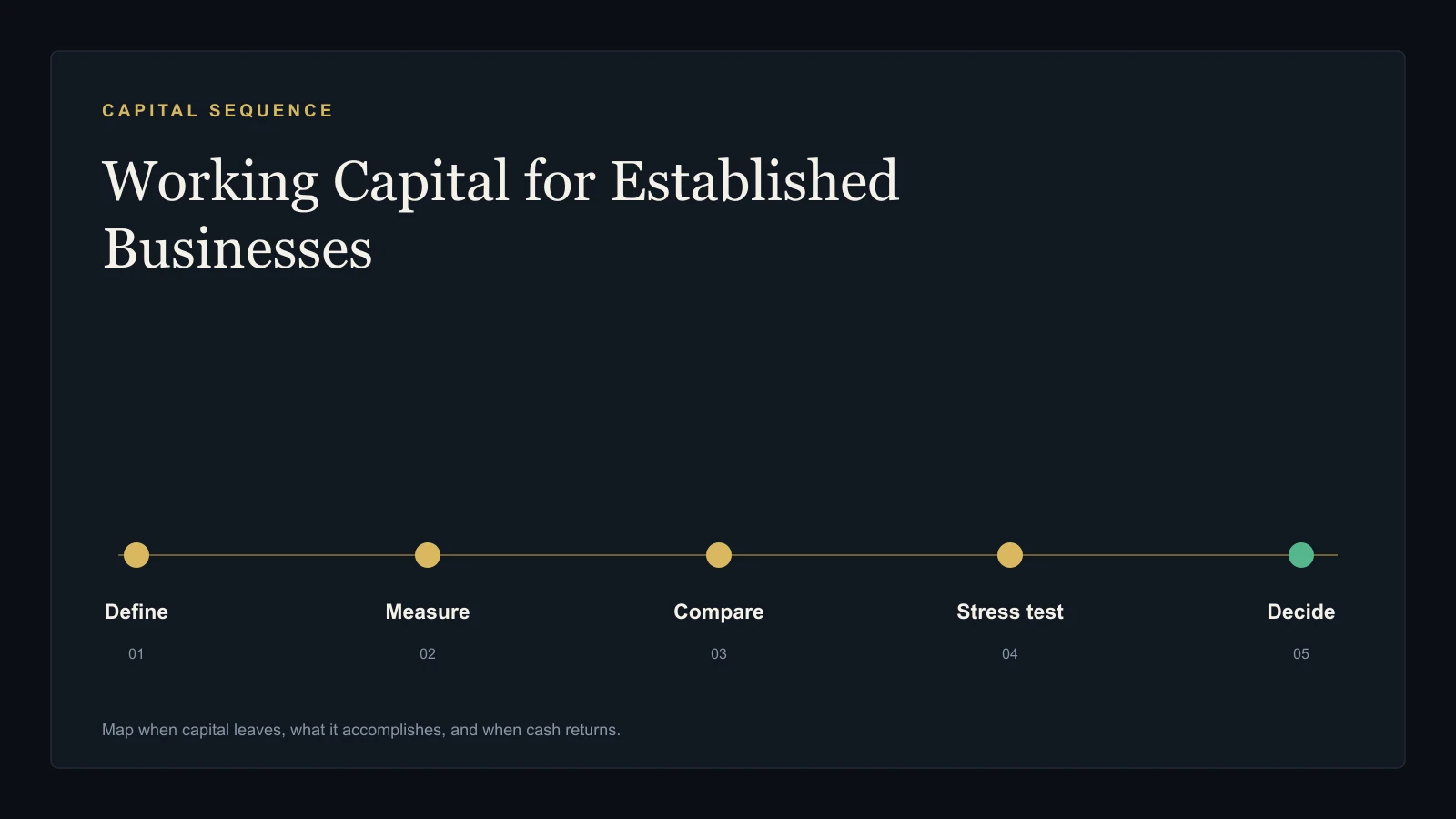
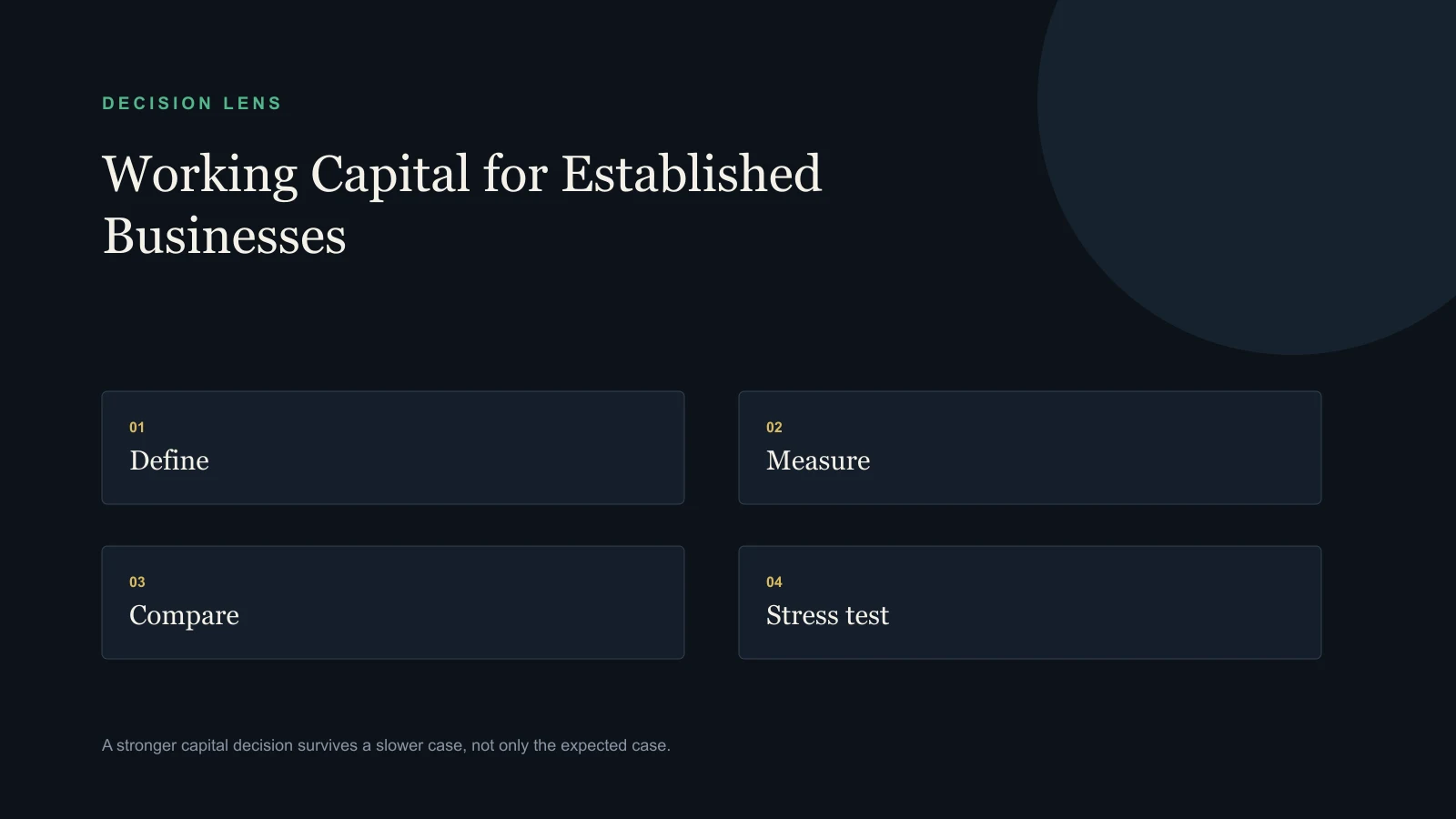
Follow the cash sequence, then test the decision against timing, cost, and downside.
Sequence: when cash leaves and when the business expects it to return.Decision lens: the questions that should remain visible before applying.
What leaves the account before the expected money comes in?
Illustrative established operator
Scale changes the size of the gap, not the logic of the decision.
$2.75M modeled peak gap
Illustration only. These numbers are a planning example, not a financing offer, expected outcome, or qualification threshold.
Receivables timing$1,300,000
Contract labor and materials$1,050,000
Inventory overlap$700,000
Available internal liquidity-$300,000
01
The problem has a name
A timing gap appears when required near-term outflows arrive before expected inflows. Profitability and liquidity answer different questions: a job may contribute profit over its full life while still placing cash under pressure in the opening weeks.
02
Put the sequence on paper
List the materials, payroll, deposits, freight, subcontractors, and other costs that must be paid. Then list available cash committed to the work and inflows expected during the same period. The difference is the estimated gap—not an approval amount.
03
Capital is one possible structure
Existing liquidity, supplier terms, customer deposits, staged delivery, a line of credit, equipment financing, or other structures may reduce or replace the need. Compare the economic outcome and operational fit.
Sources and further reading
Capital Ready uses primary institutional sources for general educational context. Product terms and eligibility vary.