Your business can be profitable and still run short of cash.
Profit lives across the full job, month, or reporting period. Payroll lives on Friday. A receivable can be valid, valuable, and still unavailable when vendors need to be paid.
See the capital decision
Two views of the same operating reality.
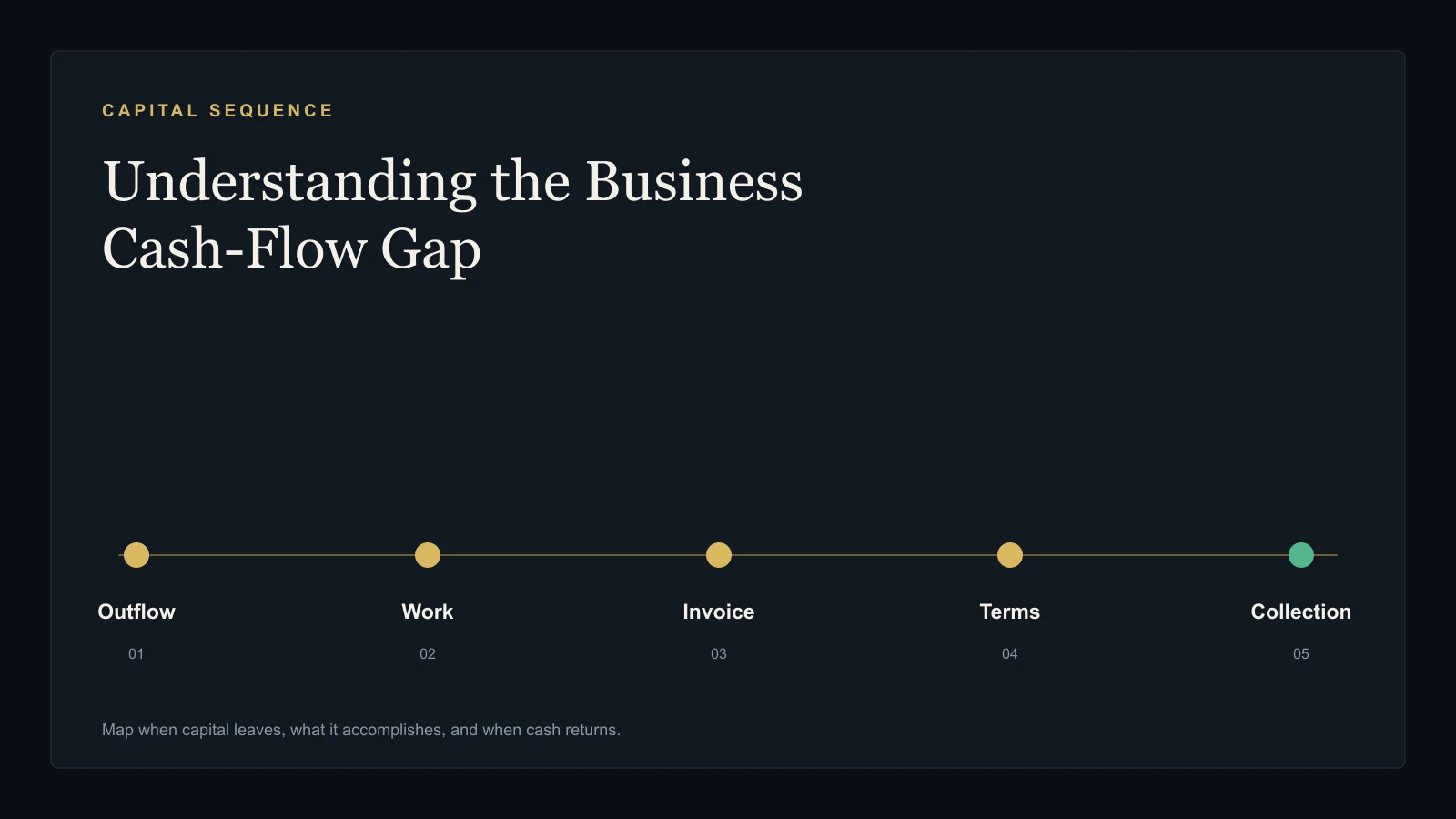
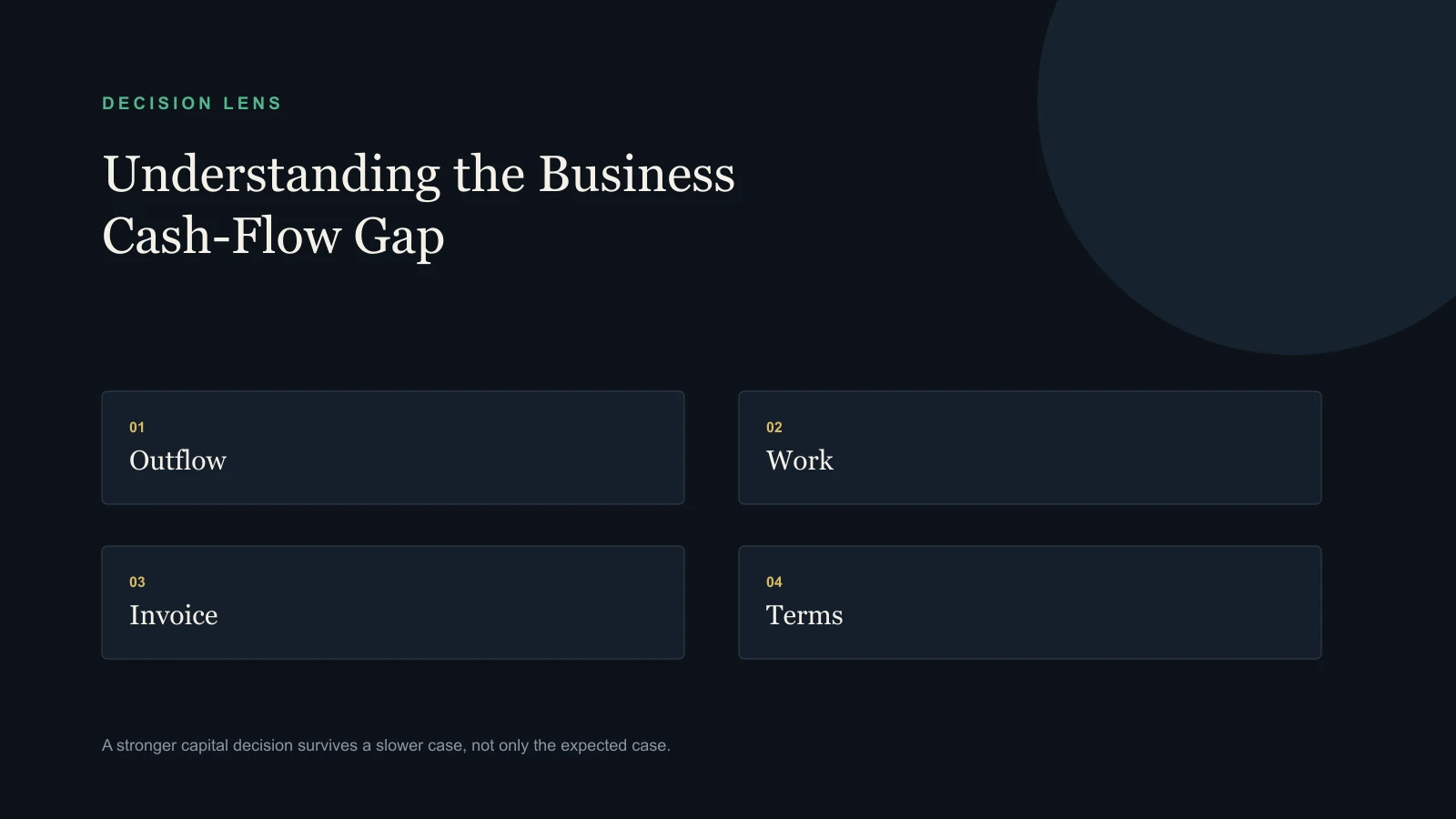
Follow the cash sequence, then test the decision against timing, cost, and downside.
Sequence: when cash leaves and when the business expects it to return.Decision lens: the questions that should remain visible before applying.
Where does cash reach its lowest point before the cycle replenishes it?
01
Profit is not the bank balance
Profit compares revenue and expense under accounting rules. Liquidity describes cash available to meet obligations now. A business needs both over time, but they do not move in lockstep.
02
Map the lowest point
Build a dated schedule of material, payroll, rent, freight, tax, and debt obligations alongside customer deposits and receivable collections. The deepest projected shortfall is the timing gap to examine.
03
Capital does not fix bad unit economics
If the underlying work loses money, financing may add cost without solving the model. First establish that the expected contribution is positive under reasonable assumptions.
Sources and further reading
Capital Ready uses primary institutional sources for general educational context. Product terms and eligibility vary.