The contract can be a win and still create a cash problem.
The customer signed. Materials must be ordered this week. Payroll runs Friday. The first invoice cannot be submitted until a milestone is complete—and the customer still has payment terms after that.
See the capital decision
Two views of the same operating reality.
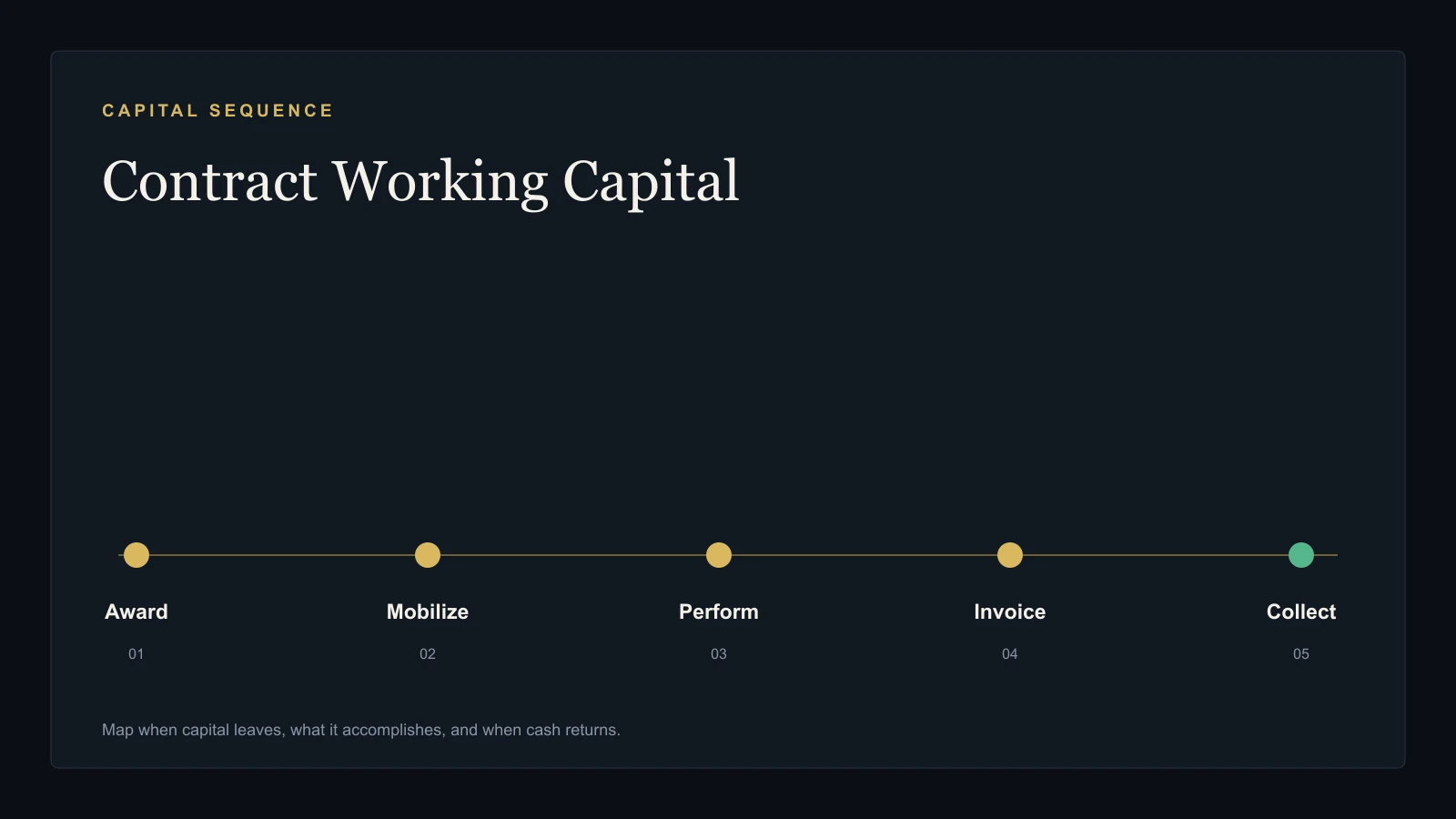
Follow the cash sequence, then test the decision against timing, cost, and downside.
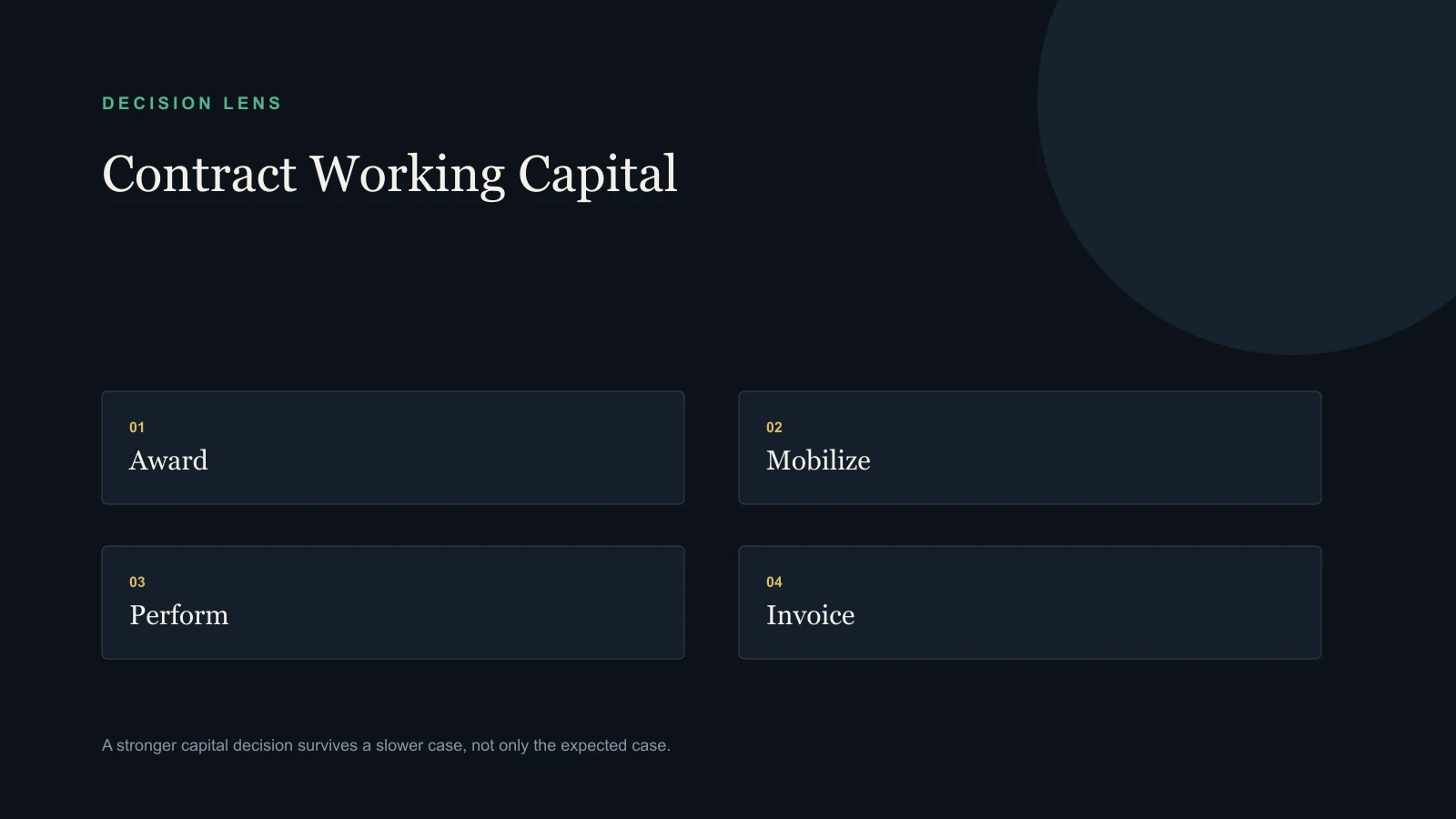
Sequence: when cash leaves and when the business expects it to return.Decision lens: the questions that should remain visible before applying.
What must the business spend before it earns the right to invoice?
Illustrative $3.4M contract
The award is large. The mobilization gap is the decision.
$1.15M modeled peak cash need
Illustration only. These numbers are a planning example, not a financing offer, expected outcome, or qualification threshold.
Materials and supplier deposits$620,000
Labor before first collection$410,000
Insurance, freight, mobilization$180,000
Allocated operating liquidity-$60,000
01
Award is not cash
A signed contract creates work and expected revenue, not immediate liquidity. Build the timeline from mobilization through performance, invoice approval, and payment.
02
Margin must survive the structure
Estimate contract gross profit, additional overhead, delay risk, and financing cost. A large contract is not automatically a good borrowing decision.
03
Reduce the gap where possible
Customer deposits, milestone billing, supplier terms, phased purchasing, and scope sequencing can sometimes lower the amount or duration of outside capital.
Sources and further reading
Capital Ready uses primary institutional sources for general educational context. Product terms and eligibility vary.