The cheapest capital is not always the best capital. The fastest is not either.
A low-cost option that arrives after the opportunity disappears may not solve the problem. A fast option with a payment cadence the business cannot carry may create another one. Compare the whole structure.
See the capital decision
Two views of the same operating reality.
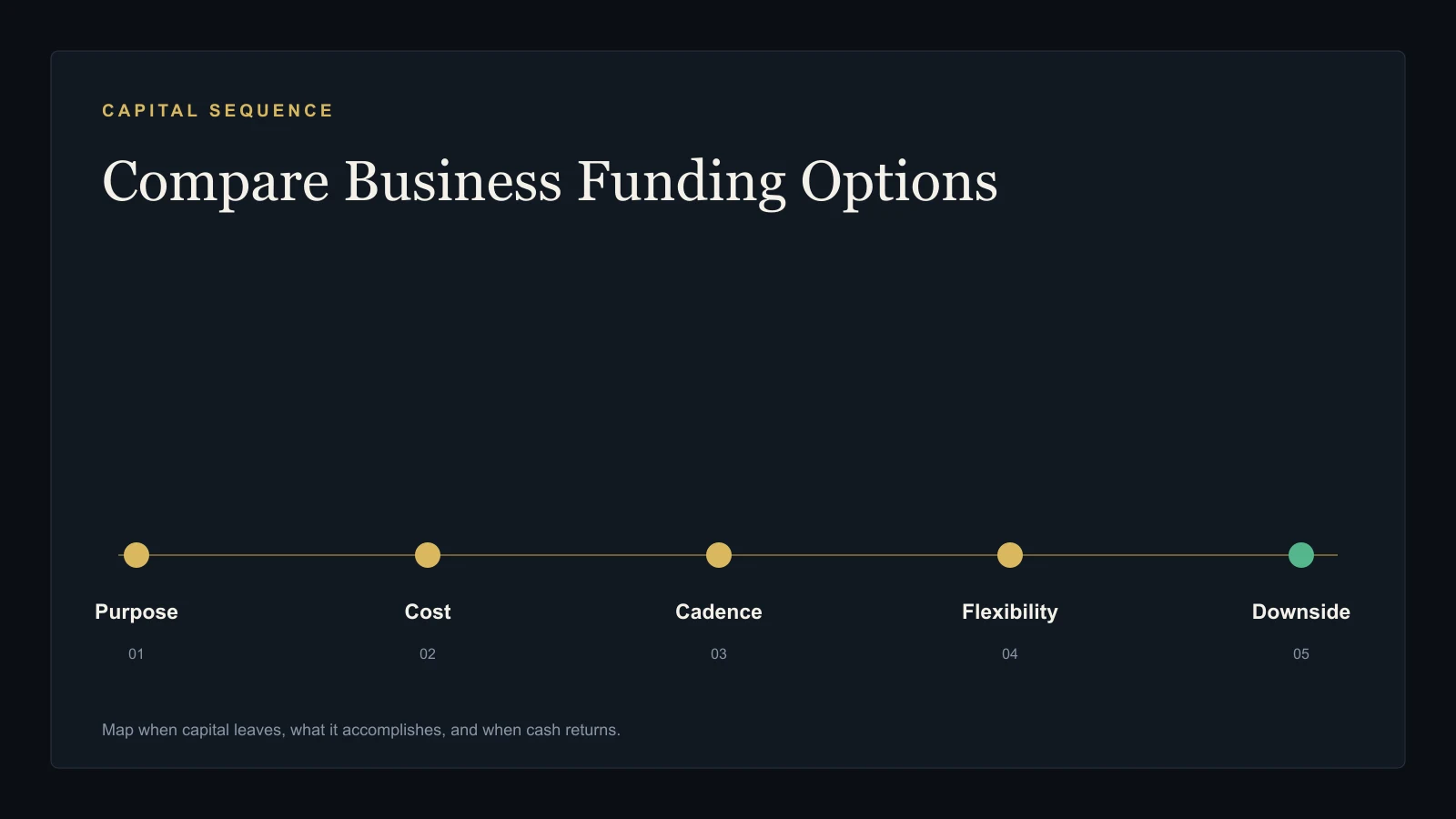
Follow the cash sequence, then test the decision against timing, cost, and downside.
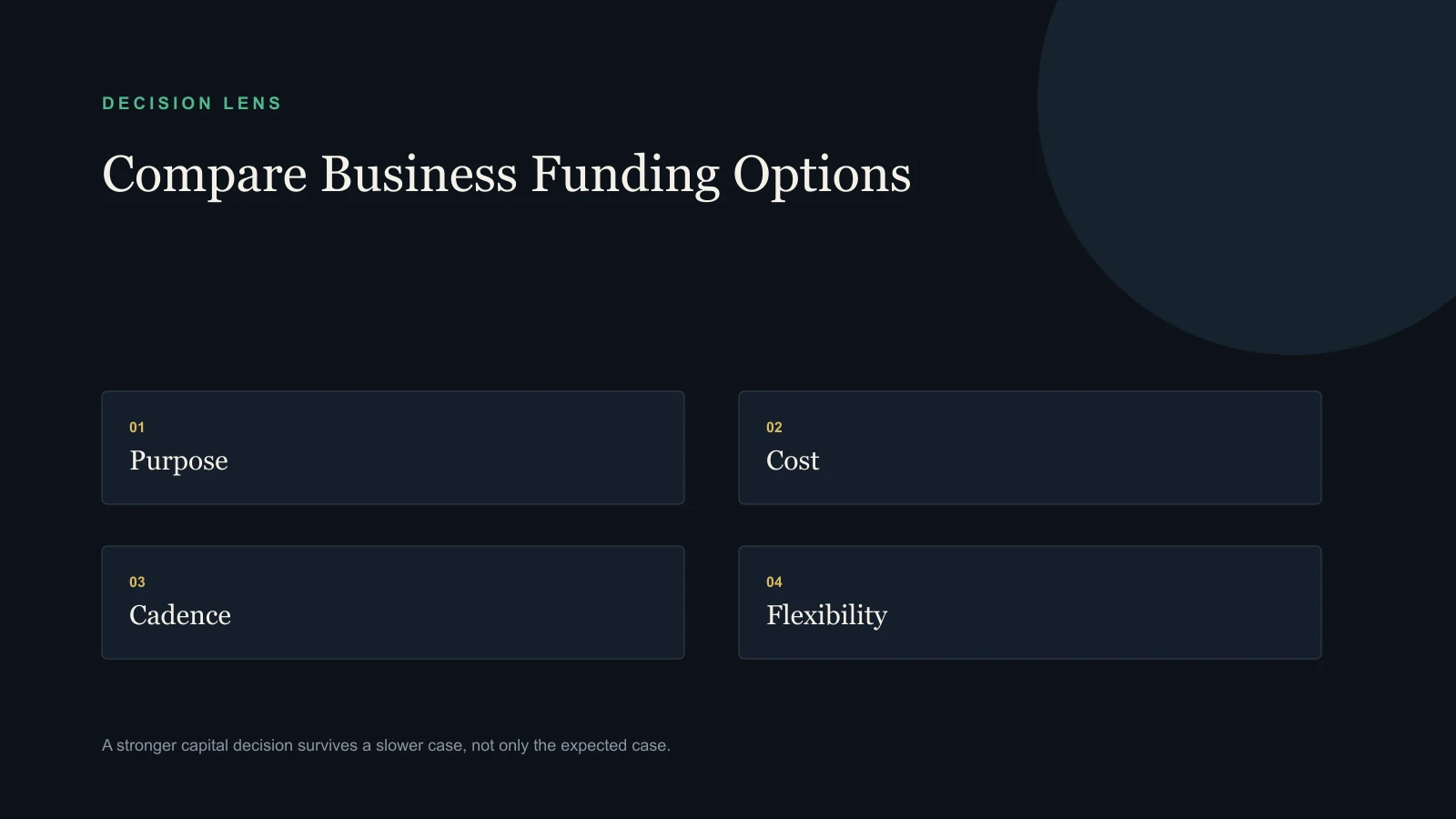
Sequence: when cash leaves and when the business expects it to return.Decision lens: the questions that should remain visible before applying.
Which option produces the strongest economic outcome under a realistic downside case?
Illustrative $2M need
Compare the whole structure, not a single headline number.
$2.0M defined capital requirement
Illustration only. These numbers are a planning example, not a financing offer, expected outcome, or qualification threshold.
Purpose fitDoes it match the asset or gap?
Cash cadenceWhen and how often does cash leave?
Total obligationWhat are the total dollars?
Downside flexibilityWhat happens when revenue arrives late?
01
Working capital and lines
Working capital may address a specific operating gap. A revolving line may fit recurring needs when the business qualifies and has time for the process.
02
Asset and term structures
Equipment financing may align repayment with an asset. Bank term loans and SBA-type programs may offer attractive structures for qualified businesses that can accommodate their process and requirements.
03
Revenue-based and MCA structures
These structures may move differently and can carry materially higher costs or frequent payments. Review the actual agreement, total obligation, payment mechanism, and business impact.
Sources and further reading
Capital Ready uses primary institutional sources for general educational context. Product terms and eligibility vary.