A similar dollar amount can create a very different daily reality.
The offer amount catches attention. The operating impact lives in the agreement: how repayment is calculated, how often money leaves, how long the obligation lasts, and what happens when revenue changes.
See the capital decision
Two views of the same operating reality.
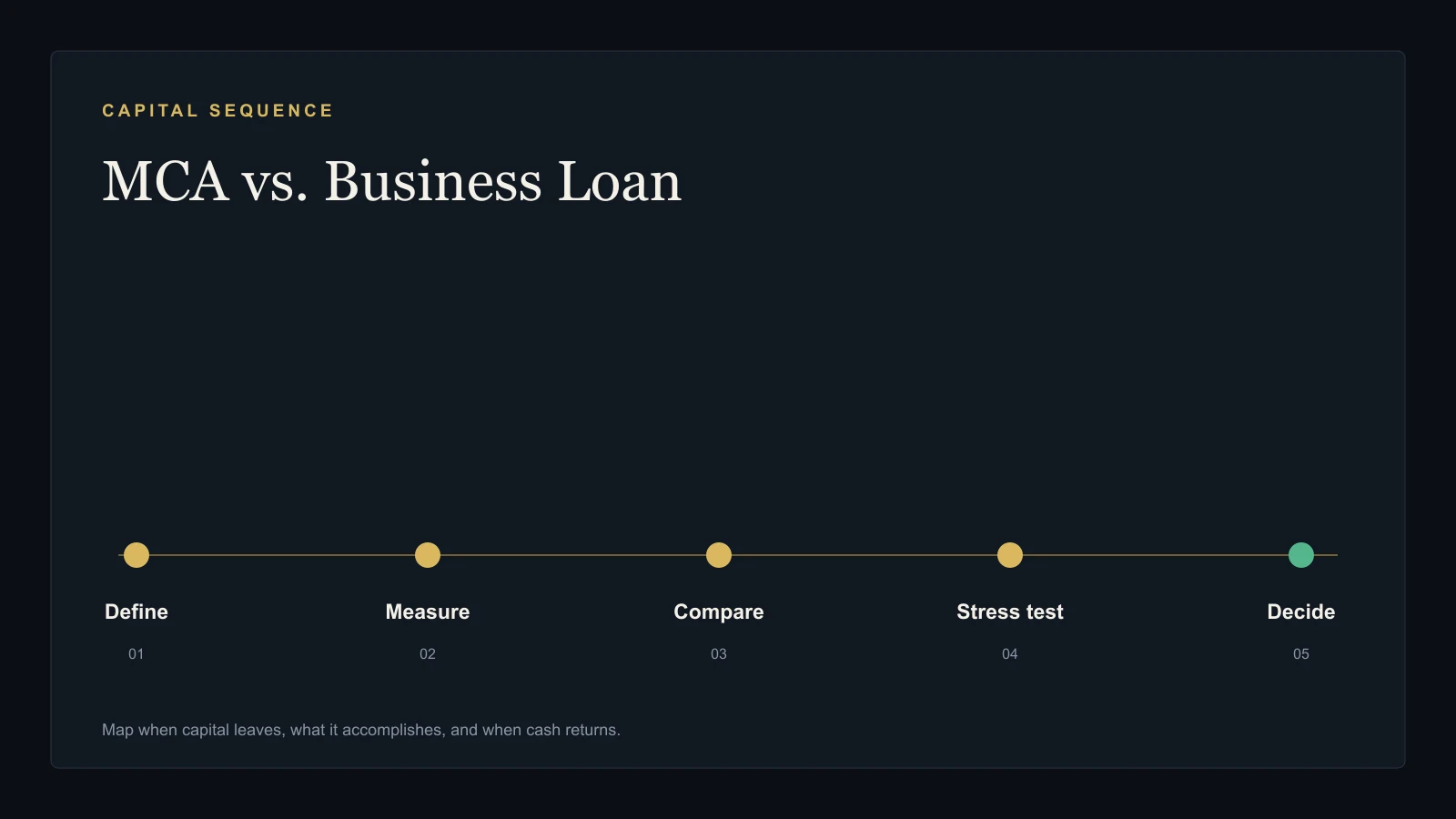
Follow the cash sequence, then test the decision against timing, cost, and downside.
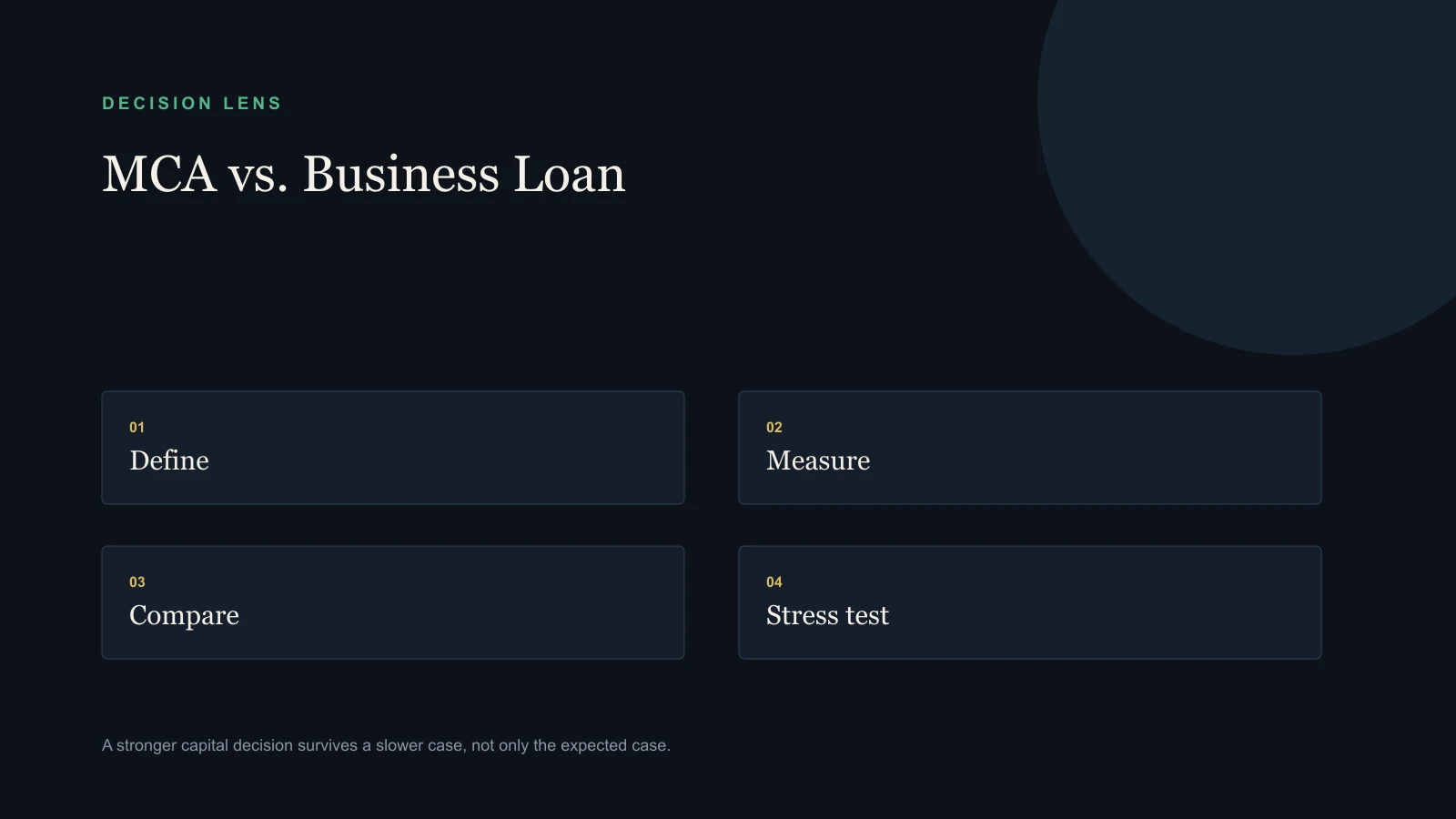
Sequence: when cash leaves and when the business expects it to return.Decision lens: the questions that should remain visible before applying.
What does the payment structure feel like in a slower sales week?
01
Read the actual contract
Labels are not enough. Review the payment mechanism, reconciliation language if any, default provisions, personal obligations, security interests, and all fees in the specific agreement.
02
Translate into cash cadence
Model each option against real weekly or monthly operating cash flow. Frequency can matter as much as the total amount.
03
Consider alternatives
A line of credit, equipment financing, bank term loan, SBA-type option, supplier terms, or customer deposit may fit better depending on purpose and timing.
Sources and further reading
Capital Ready uses primary institutional sources for general educational context. Product terms and eligibility vary.