Six weeks from now, customers may want what suppliers are selling today.
Seasonal opportunity is a calendar problem. Purchase too late and the shelves are empty. Purchase too early or too aggressively and cash sits inside inventory while payroll keeps moving.
See the capital decision
Two views of the same operating reality.
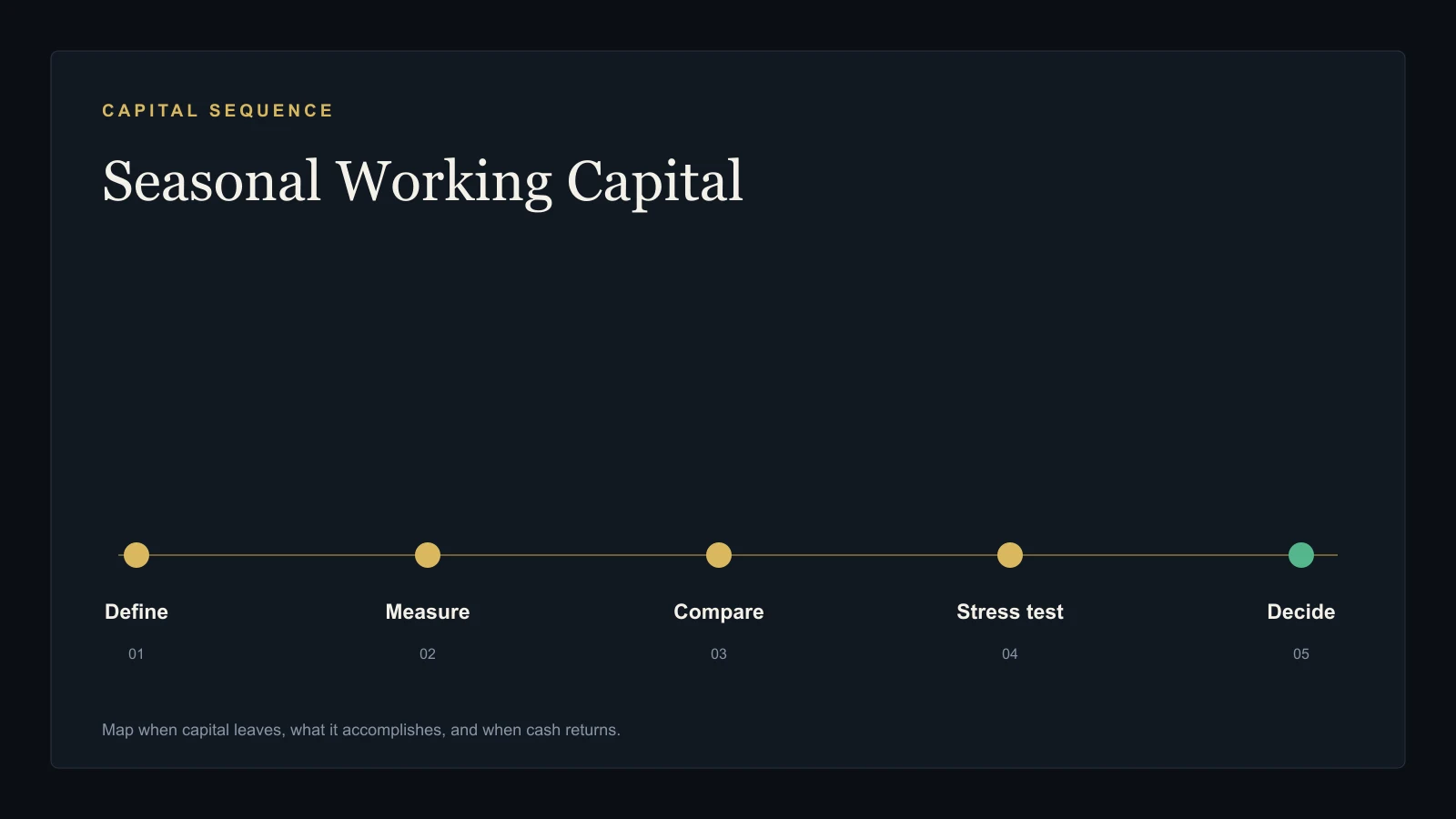
Follow the cash sequence, then test the decision against timing, cost, and downside.
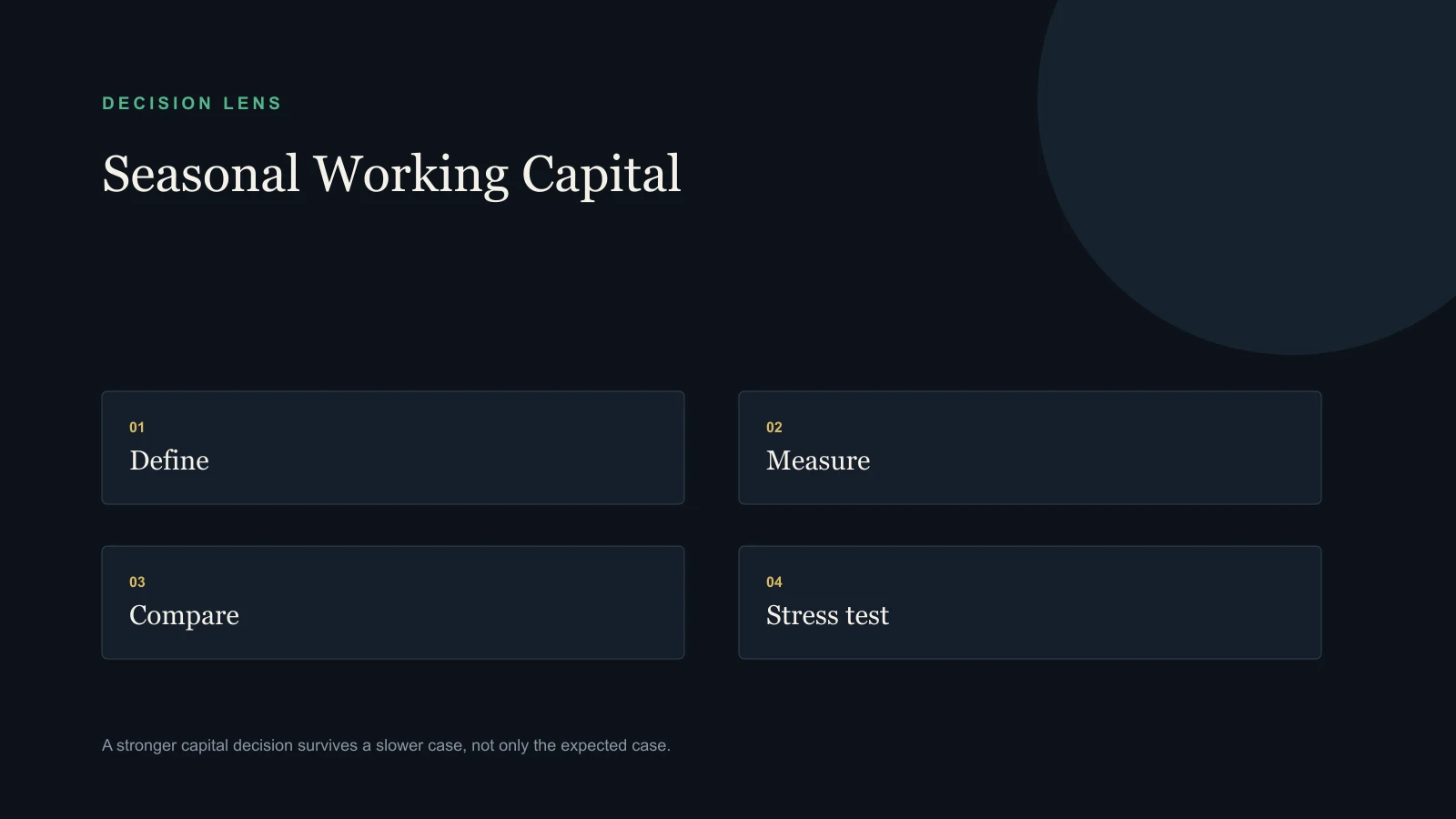
Sequence: when cash leaves and when the business expects it to return.Decision lens: the questions that should remain visible before applying.
What is left if demand arrives late—or not at the level you expect?
01
Build three cases
Model expected, slower, and weak sell-through. Show when cash returns in each case and which obligations continue regardless of sales.
02
Order timing matters
Supplier deadlines, freight, lead time, and merchandising all move cash before demand. The cheapest unit price may not create the best cash outcome.
03
Plan the exit
Decide in advance how you will respond to aging stock, markdowns, or delayed demand. Capital planning includes the way out, not only the way in.
Sources and further reading
Capital Ready uses primary institutional sources for general educational context. Product terms and eligibility vary.