Your supplier has it now. Your customers may want it six weeks from now.
The discount is real. So is the cash leaving the account. Inventory can create margin, but it also sits, moves, sells, and replenishes on a timeline that deserves more than a hopeful sales forecast.
See the capital decision
Two views of the same operating reality.
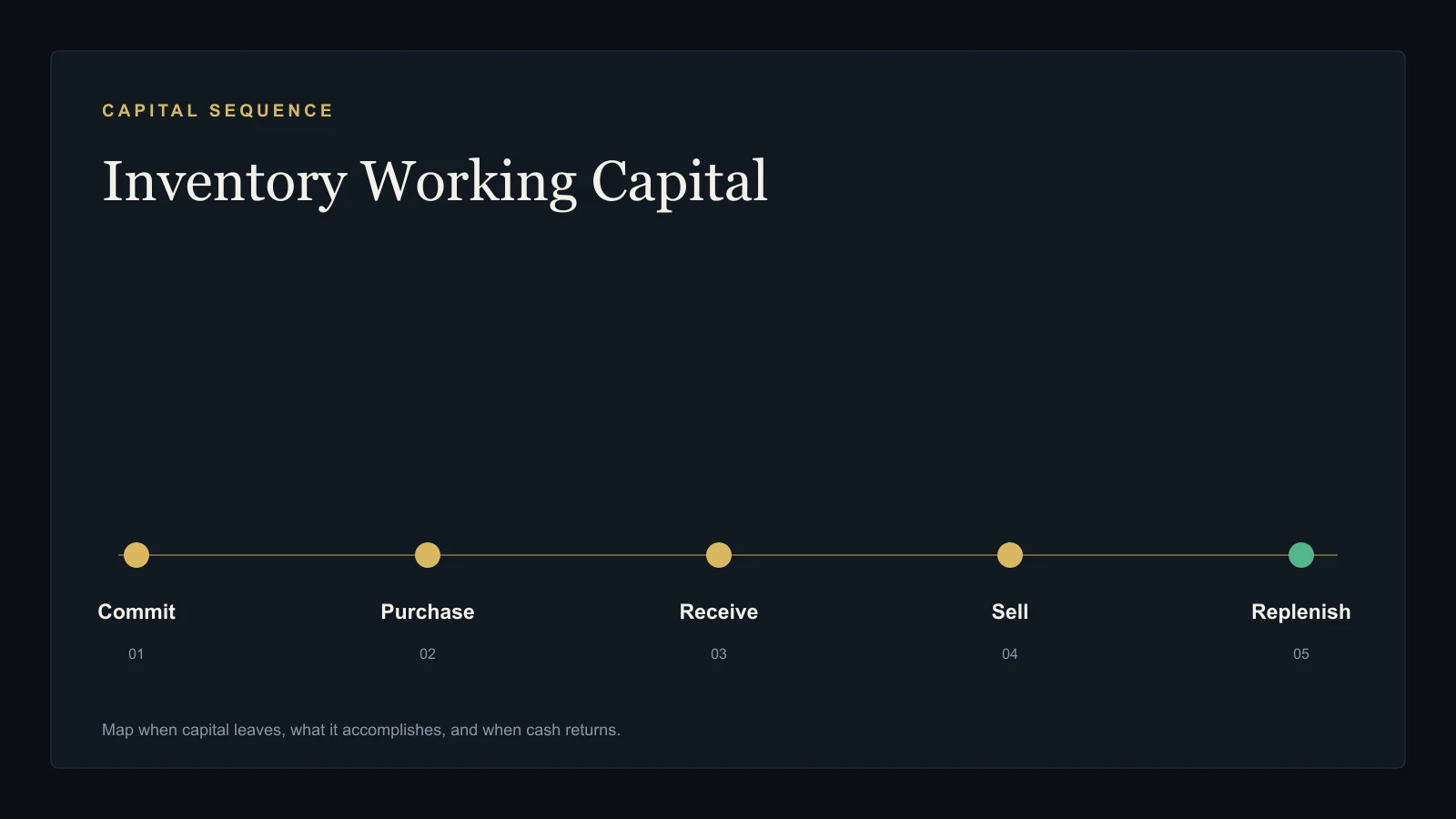
Follow the cash sequence, then test the decision against timing, cost, and downside.
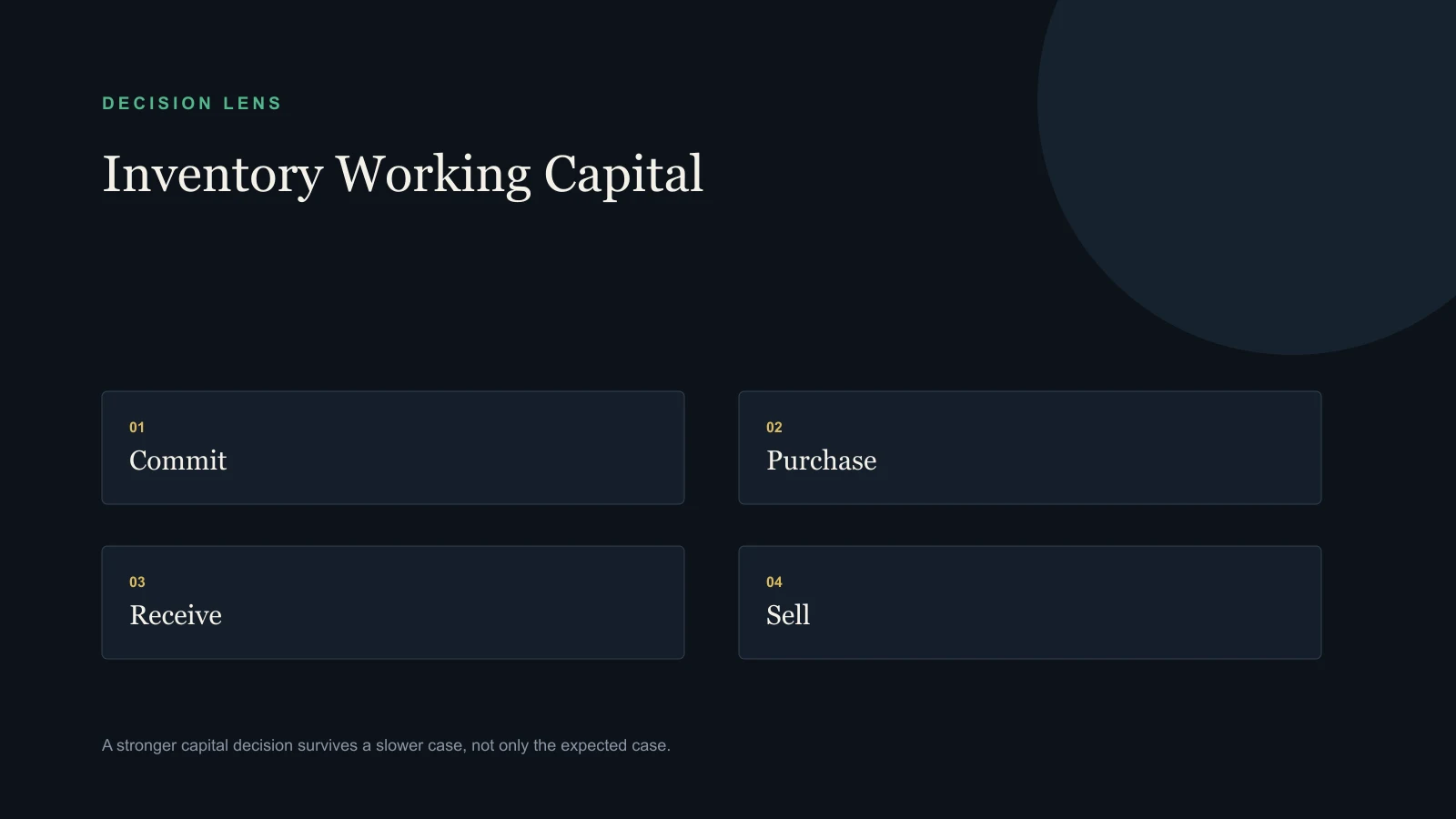
Sequence: when cash leaves and when the business expects it to return.Decision lens: the questions that should remain visible before applying.
If sell-through takes twice as long, does the purchase still make sense?
Illustrative seasonal buy
A $2.2M order can improve margin and still over-concentrate cash.
$1.48M modeled external capital need
Illustration only. These numbers are a planning example, not a financing offer, expected outcome, or qualification threshold.
Inventory and freight$2,200,000
Cash responsibly allocated-$420,000
Confirmed presale deposits-$300,000
Modeled capital gap$1,480,000
01
Discount is not contribution
A lower unit cost can improve margin, but only sold inventory produces revenue. Include freight, storage, markdown risk, spoilage or obsolescence where relevant.
02
Cash replenishes last
The sequence is supplier commitment, purchase, arrival, selling period, customer payment, then cash replenishment. The gap spans the full sequence.
03
Size the position
Buying less may preserve flexibility; buying more may secure price or availability. Compare the incremental contribution of each position rather than defaulting to the largest order.
Sources and further reading
Capital Ready uses primary institutional sources for general educational context. Product terms and eligibility vary.