“I want $100,000” sounds decisive. It does not explain what the business must pay, what cash is already available, when money returns, or whether the economics can carry the cost.
See the capital decision
Two views of the same operating reality.
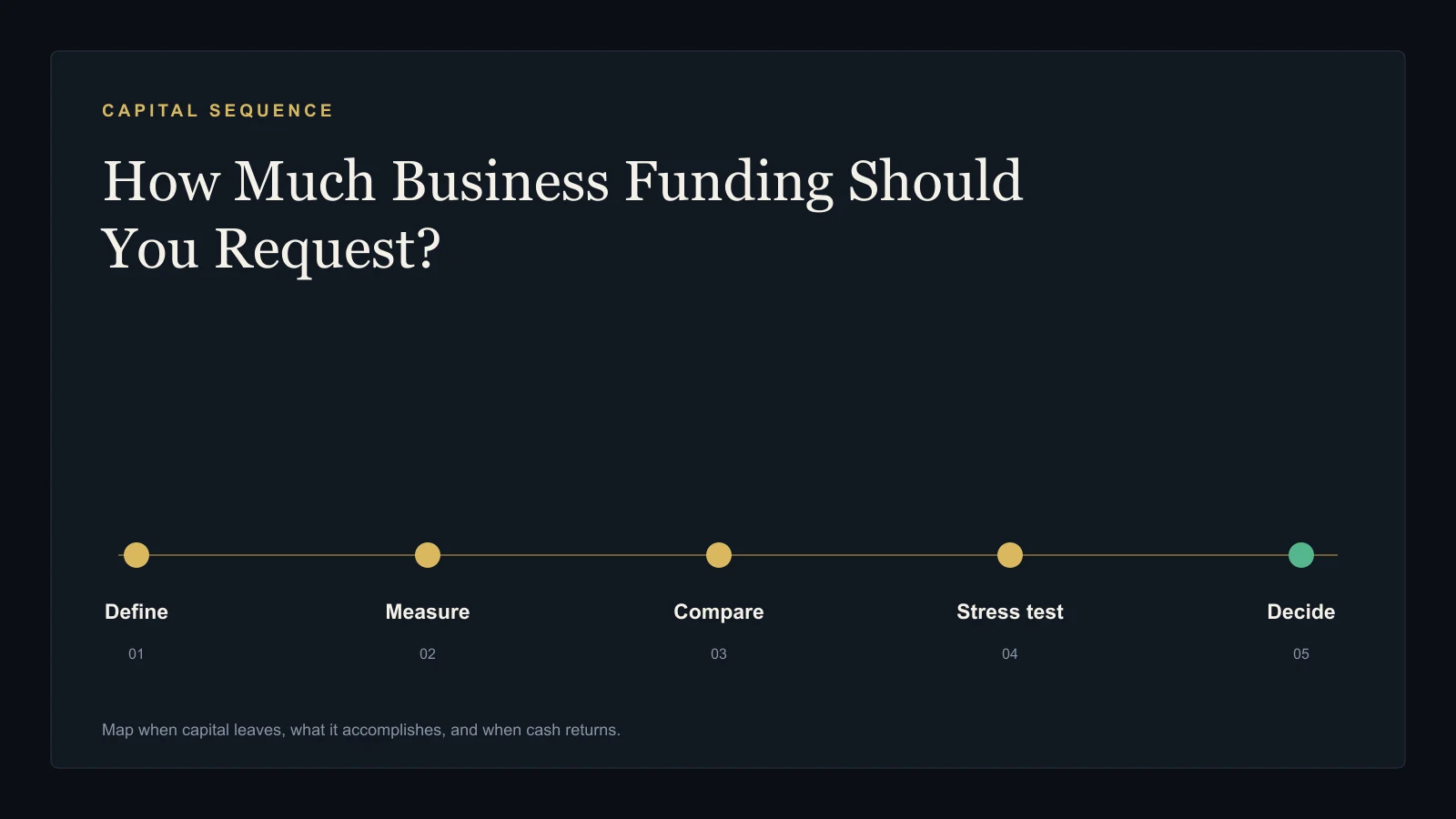
Follow the cash sequence, then test the decision against timing, cost, and downside.
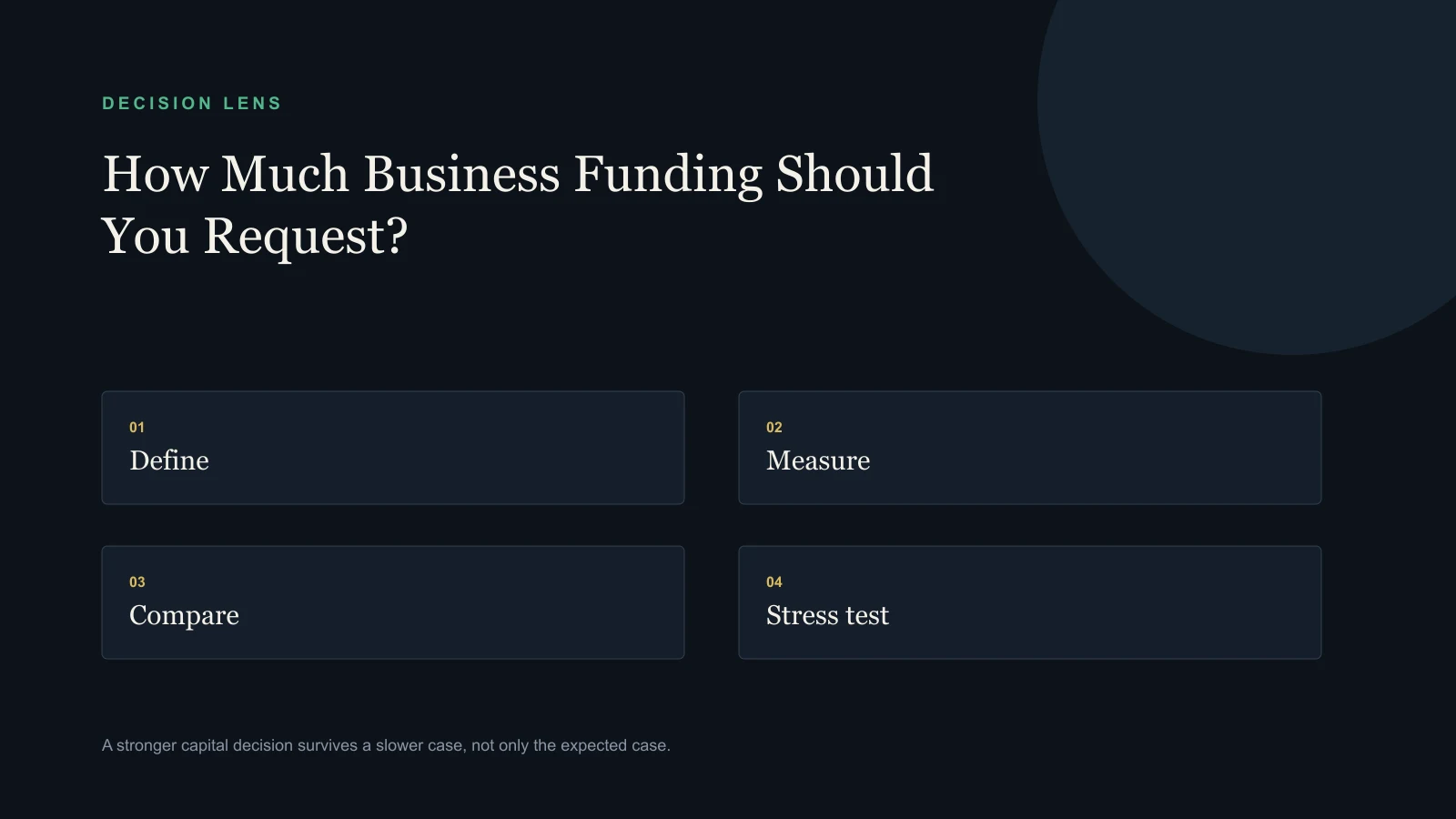
Sequence: when cash leaves and when the business expects it to return.Decision lens: the questions that should remain visible before applying.
Are you asking for what the plan requires—or for a number that merely sounds useful?
Illustrative capital plan
Build the request from timed uses, not from a maximum.
$4.35M modeled requirement
Illustration only. These numbers are a planning example, not a financing offer, expected outcome, or qualification threshold.
Defined project costs$3,600,000
Operating runway$900,000
Defensible contingency$350,000
Allocated business cash-$500,000
01
Build from line items
List inventory, materials, payroll, deposits, freight, equipment, buildout, and other defined costs. Put dates beside them.
02
Subtract what is already available
Include only cash the business can responsibly allocate without starving normal operations, plus inflows reasonably expected during the same gap.
03
Contingency needs a reason
A contingency should reflect identifiable timing or cost uncertainty, not a desire to maximize the request. Bigger requests do not manufacture bigger offers.
Sources and further reading
Capital Ready uses primary institutional sources for general educational context. Product terms and eligibility vary.