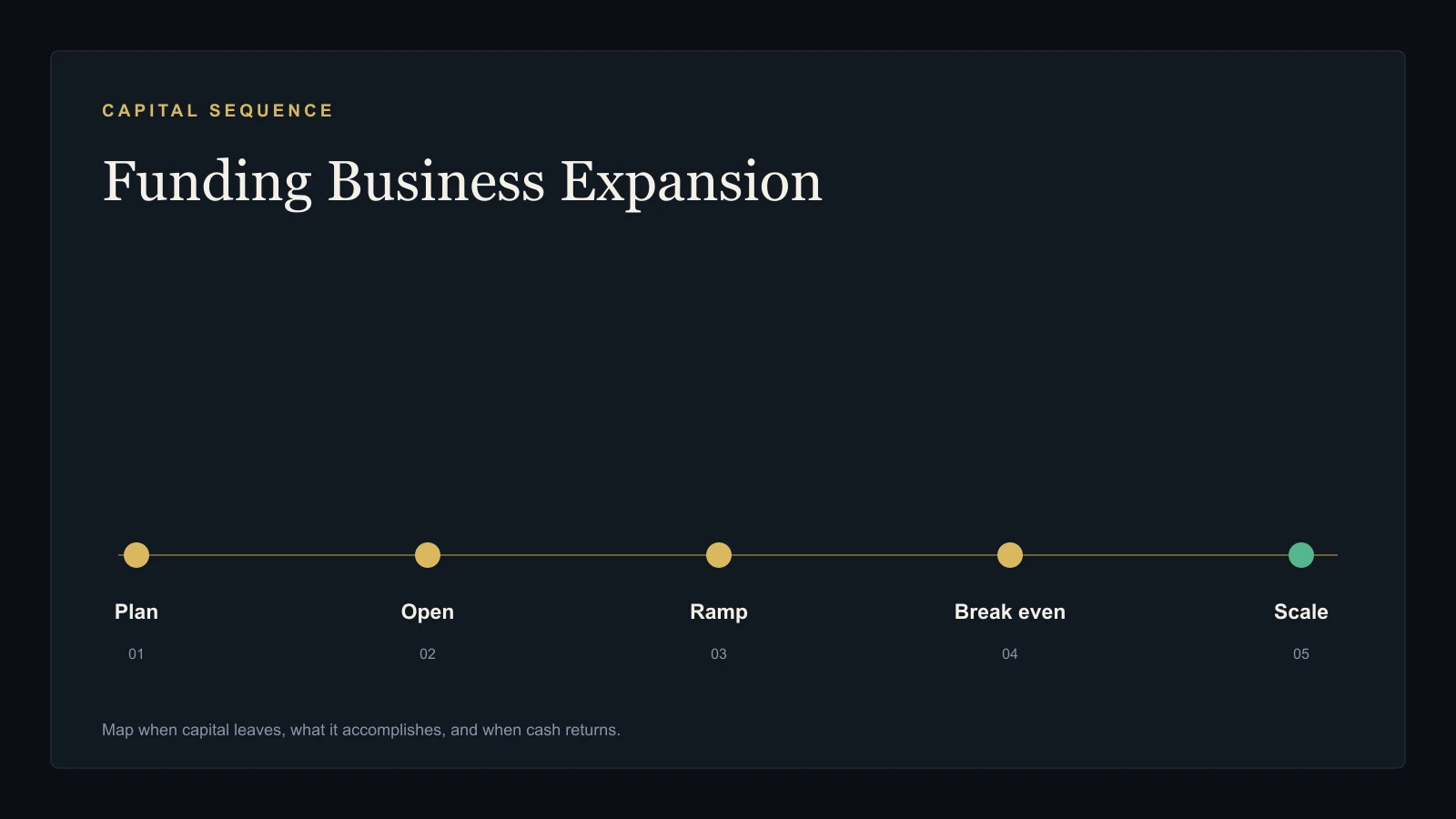
The second location looks profitable. What happens before it breaks even?
The lease starts. Buildout invoices arrive. The new team trains. Customers have not formed a habit yet. Expansion can be strategically sound while still creating months of cash pressure.
See the capital decision
Two views of the same operating reality.
Follow the cash sequence, then test the decision against timing, cost, and downside.
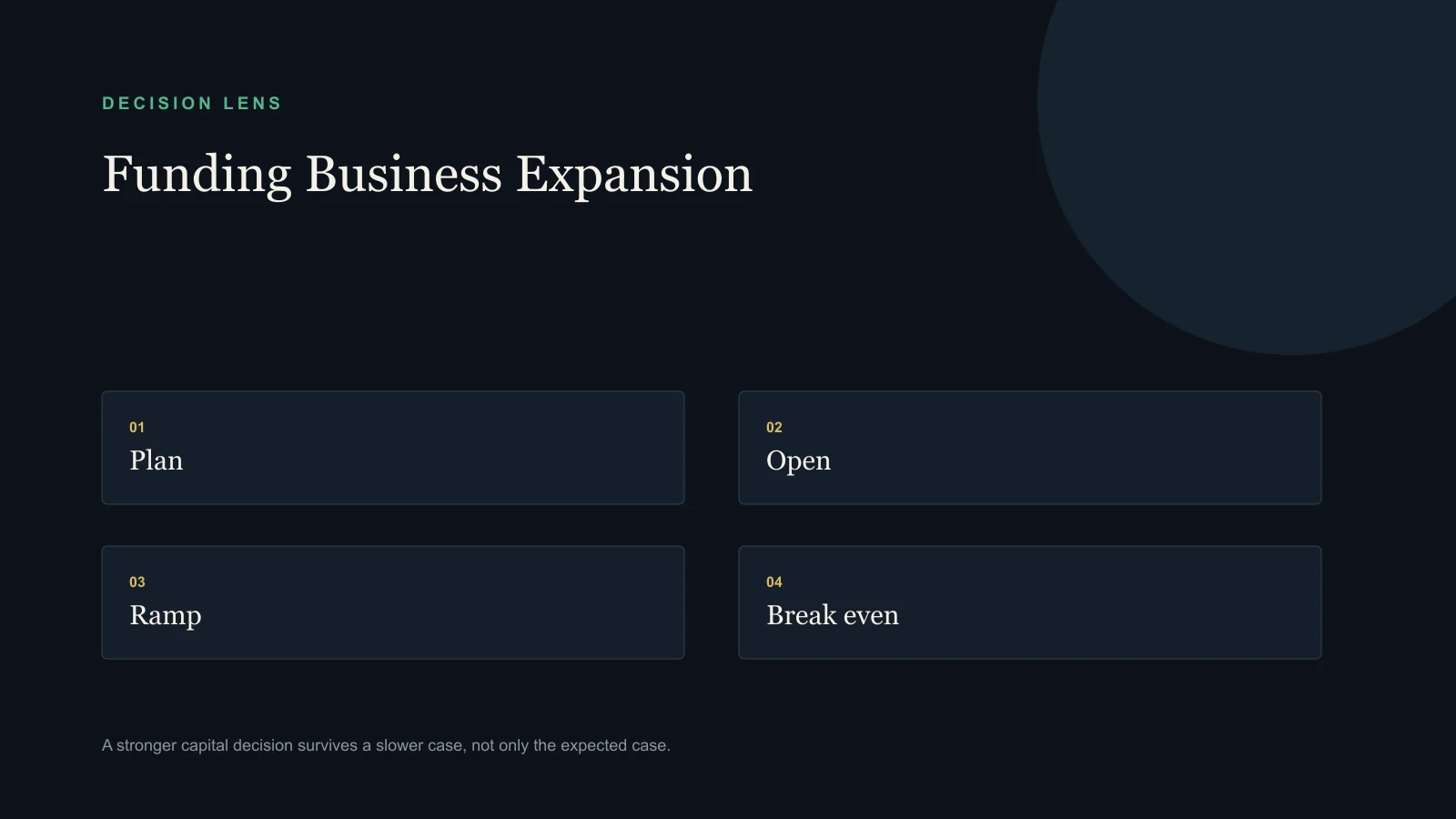
Sequence: when cash leaves and when the business expects it to return.Decision lens: the questions that should remain visible before applying.
How long can the new operation carry its own weight later than planned?
Illustrative multi-location expansion
Three openings create one portfolio-level liquidity problem.
$4.1M staged capital program
Illustration only. These numbers are a planning example, not a financing offer, expected outcome, or qualification threshold.
Buildout and equipment$2,350,000
Opening inventory$780,000
Six-month operating runway$1,320,000
Owner equity and internal cash-$350,000
01
Map the ramp
Separate one-time opening costs from recurring expenses. Model several months of payroll, rent, utilities, inventory, insurance, and marketing before assuming the location reaches steady performance.
02
Protect the original business
Expansion capital should not quietly consume the liquidity needed to run the existing operation. Keep the base business visible in every scenario.
03
Know the exit from the gap
Identify when and how the expansion begins replenishing cash. If the answer depends on a single optimistic month, test a slower case.
Sources and further reading
Capital Ready uses primary institutional sources for general educational context. Product terms and eligibility vary.